
Hercule Poirot
10. Hickory Dickory Dock

Summary: An outbreak of kleptomania at a student hostel was not normally the sort of crime that aroused Hercule Poirot’s interest. But when he saw the list of stolen and vandalized items – including a stethoscope, some old flannel trousers, a box of chocolates, a slashed rucksack and a diamond ring found in a bowl of soup – he congratulated the warden, Mrs Hubbard, on a ‘unique and beautiful problem’. The list made absolutely no sense at all. But, reasoned Poirot, if this was merely a petty thief at work, why was everyone at the hostel so frightened?
Review: This was an enjoyable read. The mystery was interesting, and I liked the different references to some of his previous cases that I remember reading.
9. Dumb Witness

Summary: Everyone blamed Emily Arundell’s accident on a rubber ball left on the stairs at her home in Market Basing by her frisky terrier, Bob. But the more she thought about her fall, the more convinced she became that one of her relatives was trying to kill her.
So, on April 17th she wrote about her anxieties and suspicions in a letter to Hercule Poirot. And included a request that he consult with her as soon as possible. Mysteriously he didn’t receive the letter until June 28th … by which time Emily was already dead.
Review: This was an enjoyable read. Especially with there being some perspective from a dog, it was a very engaging mystery. I was constantly guessing who committed the crime.
8. Mrs. McGinty’s Dead

Summary: Mrs. McGinty died from a brutal blow to the back of her head. Suspicion falls immediately on her shifty lodger, James Bentley, whose clothes reveal traces of the victim’s blood and hair. Yet something is amiss: Bentley just doesn’t seem like a murderer.
Could the answer lie in an article clipped from a newspaper two days before the death? With a desperate killer still free, Hercule Poirot will have to stay alive long enough to find out. . . .
Review: This was definitely one of the better mysteries that constantly had me guessing who the killer could have been. It does fall into the trap of too many red herrings and a double mystery trying to be solved, but overall, it was enjoyable.
7. Elephants Can Remember

Summary: Hercule Poirot stood on the cliff-top. For here, many years earlier, there had been a tragic accident – the broken body of a woman was discovered on the rocks at the foot of the cliff. This was followed by the grisly discovery of two more bodies – a husband and wife – shot dead. But who had killed whom? Was it a suicide pact? A crime of passion? Or cold-blooded murder? Poirot delves back into a crime committed 15 years earlier and discovers that, when there is a distinct lack of physical evidence, it’s just as well that ‘old sins leave long shadows.’
Review: As someone who doesn’t have the best memory, I resonated with the main idea of the story. As time goes forward, my memory distorts, and I appreciate learning more about how different people remember the events that are too hazy for me. In this story, the memories are pieced back together to solve a crime and close a chapter for some people. 4/5
6. The Mysterious Affair at Styles
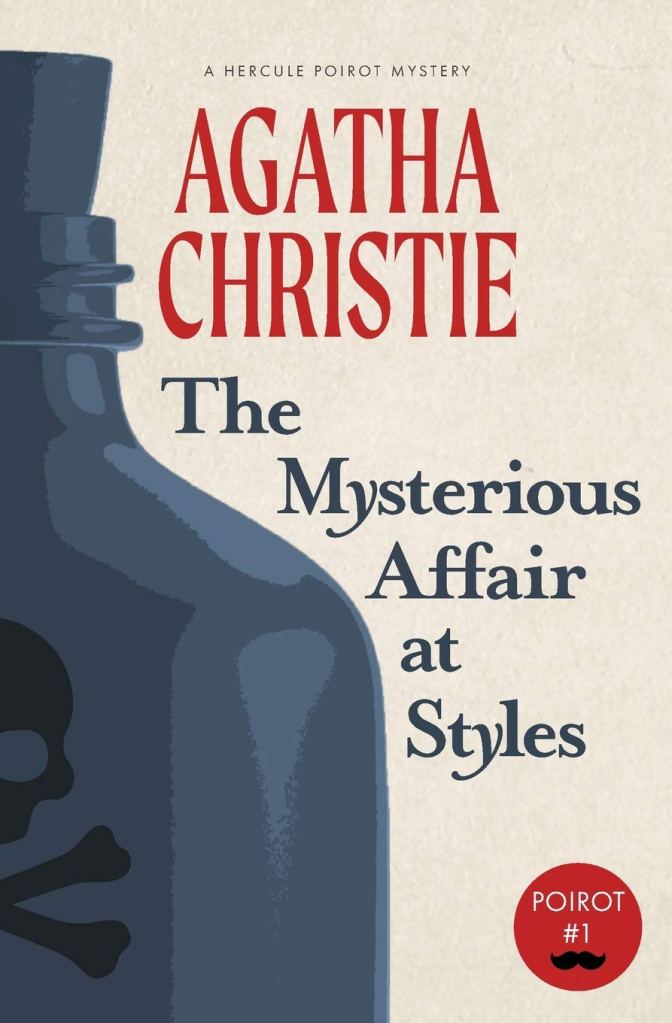
Summary: A refugee of the Great War, Poirot has settled in England near Styles Court, the country estate of his wealthy benefactor, the elderly Emily Inglethorp. When Emily is poisoned and the authorities are baffled, Poirot puts his prodigious sleuthing skills to work. Suspects are plentiful, including the victim’s much younger husband, her resentful stepsons, her longtime hired companion, a young family friend working as a nurse, and a London specialist on poisons who just happens to be visiting the nearby village.
All of them have secrets they are desperate to keep, but none can outwit Poirot as he navigates the ingenious red herrings and plot twists.
Review: The plot is a classic one, and the introduction to Christie’s most famous detective was a good one. Hastings was kind of annoying with how he interacted and thought of everyone, especially the females. I’m interested to read more featuring Poirot.

Summary: The tranquility of a lovely cruise along the Nile is shattered by the discovery that Linnet Ridgeway has been shot. She was young, stylish and beautiful, a girl who had everything – until she lost her life.
Who is also on board? Christie’s great detective Hercule Poirot is on holiday. He recalls an earlier outburst by a fellow passenger: ‘I’d like to put my dear little pistol against her head and just press the trigger.’ Despite the exotic setting, nothing is ever quite what it seems…
Review: I enjoyed reading another classic Christie work, and I’m even more interested to see the different screen adaptations if only to finally be able to put faces to names. While the mystery was a standard one, it ran into one of my normal complaints in that it had too many characters. There were so many side mysteries and characters who would pop up for a page and then disappear only to show up later as a potential suspect in a different mystery.
4. The ABC Murders
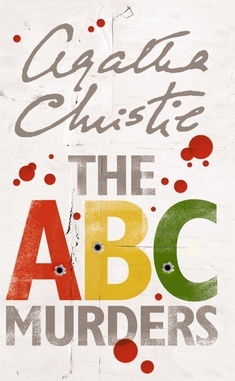
Summary: When Alice Asher is murdered in Andover, Hercule Poirot is already looking into the clues. Alphabetically speaking, it’s one letter down, twenty-five to go.
There’s a serial killer on the loose. His macabre calling card is to leave the ABC Railway Guide beside each victim’s body. But if A is for Alice Asher, bludgeoned to death in Andover, and B is for Betty Bernard, strangled with her belt on the beach at Bexhill, who will then be Victim C? More importantly, why is this happening?
Review: I enjoyed the different storytelling format used to tell this mystery. I could do at times without Hastings and his constant doubt in Poirot, but what can be expected of him by now. This was one of her more classic mysteries that constantly had me guessing.
3. Curtain
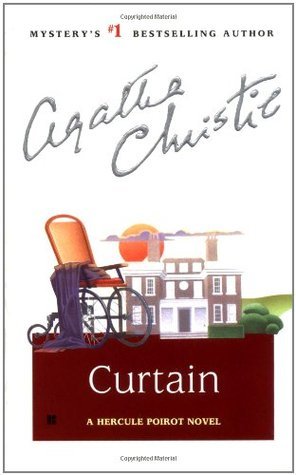
Summary: Arthritic and immobilized, Poirot calls on his old friend Captain Hastings to join him at Styles to be the eyes and ears that will feed observations to Poirot’s still razor sharp mind. Though aware of the criminal’s identity, Poirot will not reveal it to the frustrated Hastings, and dubs the nameless personage ‘X’. Already responsible for several murders, X, Poirot warns, is ready to strike again, and the partners must work swiftly to prevent imminent murder.
Poirot’s final case, a mystery which brings him and Hastings back to Styles where they first solved a crime together. The story was both anticipated and dreaded by Agatha Christie fans worldwide, many of whom still refuse to read it, as it is known to contain Poirot’s death.
Review: The death of Poirot is one that sends the detective out with a bang rather than a whimper, as I was afraid of happening. Instead, I was treated to Poirot being his normally clever self while we also get the return of Hastings, who we had not seen in several books. This was an enjoyable read, and I enjoyed seeing the results of Poirot’s last case.
2. Murder on the Orient Express
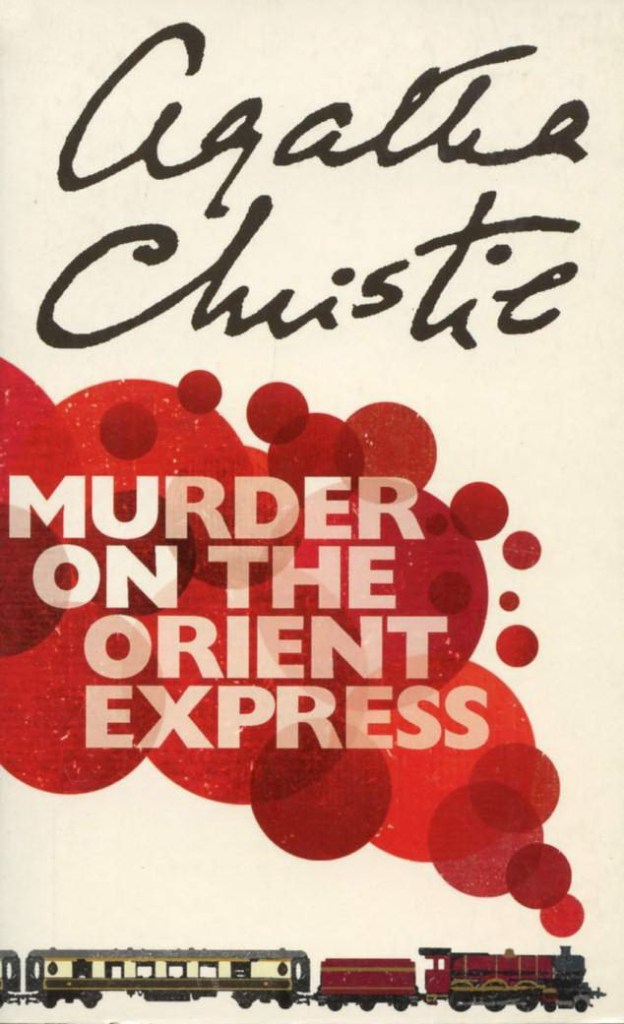
Summary: Just after midnight, a snowdrift stops the famous Orient Express in its tracks as it travels through the mountainous Balkans. The luxurious train is surprisingly full for the time of the year but, by the morning, it is one passenger fewer. An American tycoon lies dead in his compartment, stabbed a dozen times, his door locked from the inside.
One of the passengers is none other than detective Hercule Poirot. On vacation.
Isolated and with a killer on board, Poirot must identify the murderer—in case he or she decides to strike again.
Review: Once again, Agatha Christie has amazed me with the intricate plot and varied cast of characters and one of her most famous works. I thoroughly enjoyed trying to piece together the puzzle of the mystery and the secrets of the characters. However, a negative to this is that because Christie employed a large cast, it was hard to keep track of all the characters. This led to me being confused many times when a connection was made.
1. The Murder of Roger Ackroyd
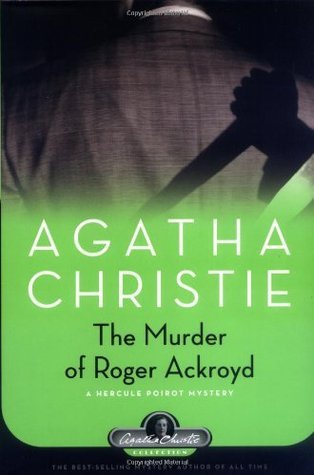
Summary: The peaceful English village of King’s Abbot is stunned. The widow Ferrars dies from an overdose of Veronal. Not twenty-four hours later, Roger Ackroyd—the man she had planned to marry—is murdered. It is a baffling case involving blackmail and death that taxes Hercule Poirot’s “little grey cells” before he reaches one of the most startling conclusions of his career.
Review: This was a very enjoyable read! I loved trying to figure out who the true murderer was through the eyes of the main character. The information they know and provide is all I had to work with, but made for a great read.
 Luna's Literary Corner
Pingback: 2024: Yearly Reflection – Luna's Literary Corner